
– Continuing our occasional history series, we look back to Whāingaroa a century ago – 1926 (part 2)
By John Lawson
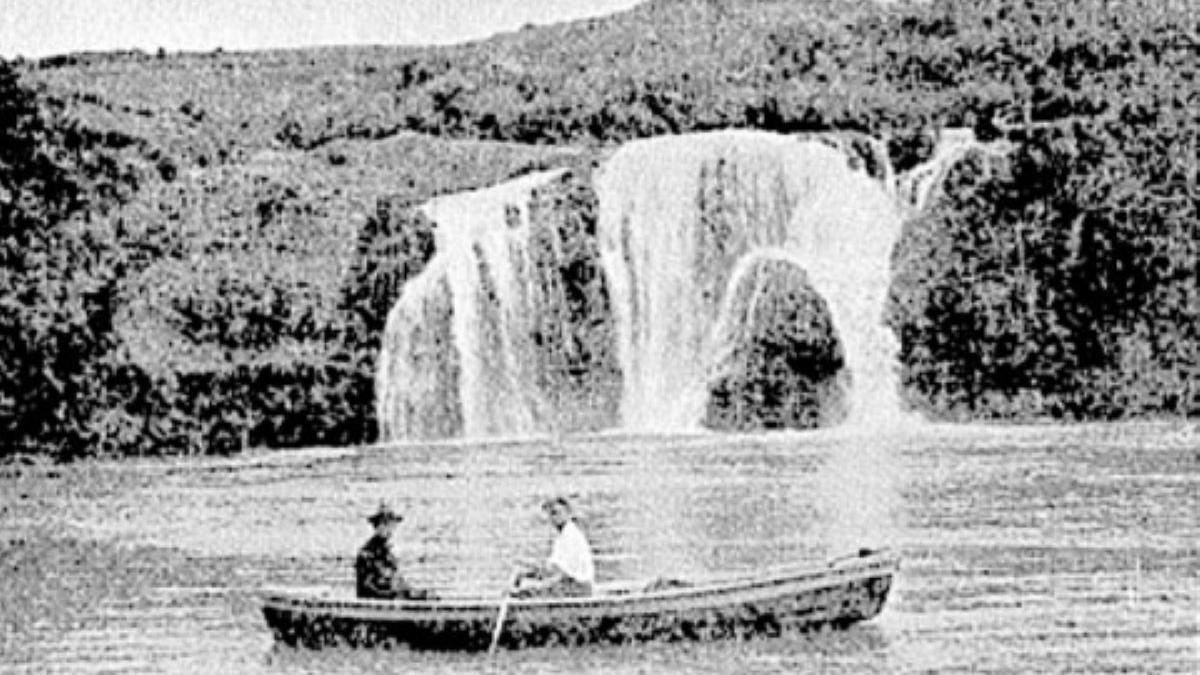
In September a Cobweb Fair at the Hamilton Y.M.C.A. (a name used by Australasian non-conformist churches for their fairs in the 1920s and 30s, decorated with cobwebs and once described as stallholders being the spiders and the buyers as the flies) raised money towards buying a community camp site at Okete, for which E O Wallis sold his 13 acres for £1,000. Dr Spencer said at its official opening on 13 December 1926, “the youth of the present day demanded an outlet. Home life had, to a large extent, disappeared.” Camp Fergusson was bought following an appeal by the Governor General, Sir Charles Fergusson. £100 was also raised by Hamilton Rotary Club members and the balance by trustees, including the Mayor of Hamilton. It was described as, “ideally situated, providing many natural facilities for camping, fishing, boating, fresh and seawater swimming, recreational grounds for games and open and bush covered country. A regular timetable will be followed in camp and will include physical exercises, swimming, boating, tramps, mountaineering, cricket, football, athletic sports, over-night camps and concerts. It is also anticipated that a wireless set will be installed at the camp”. About 30 men from Hamilton built a cookhouse, boat-house, drainage, a ram pump for water supply and a flagpole. The camp was used by Scouts, Guides and other youth groups.
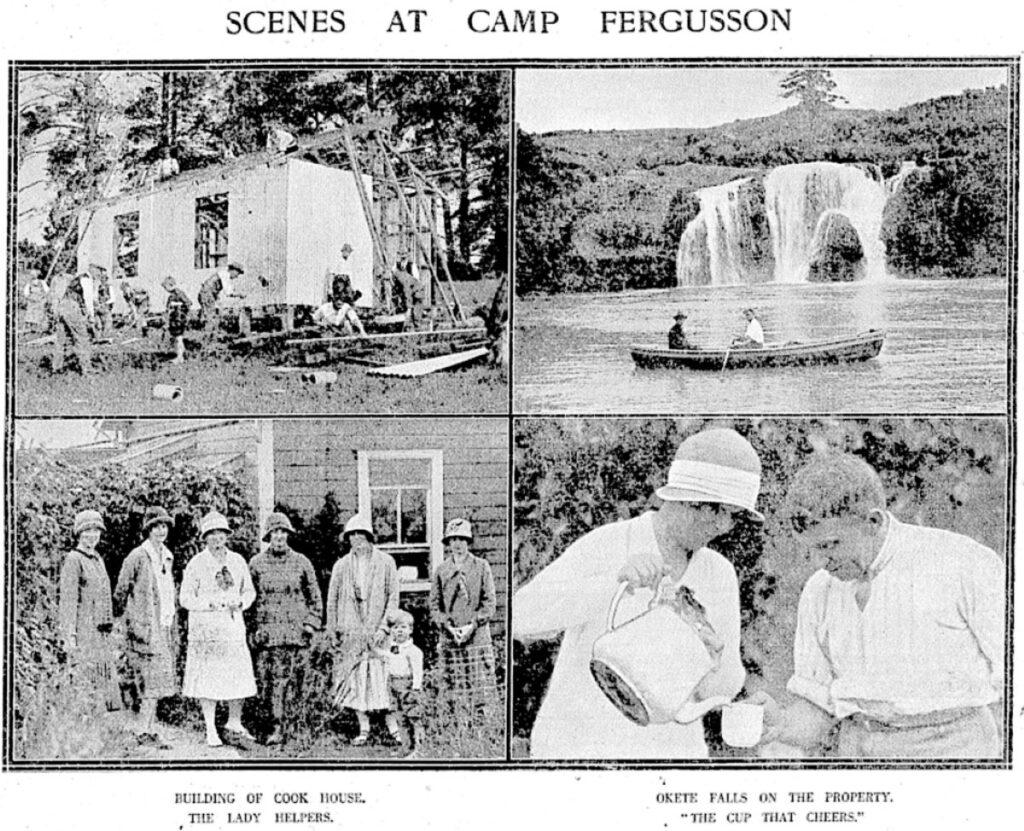
It was run by a committee of Hamilton Borough, Public Schools Headmasters, Rotary Club, Scouts, Guides, YMCA and Hamilton churches, whose aim was “future citizen building . . . under proper and wholesome discipline”. They reluctantly agreed to holidays for poor children, but only on condition of “strict order and discipline”, Due to that reluctance, William Paul (of Paul’s Book Arcade) and Hilda Ross (later a National MP and Minister for the Welfare of Women & Children) set up Port Waikato Children’s Camp League in 1929. Use of Camp Fergusson rapidly declined and by 1933 it was said Okete was not suitable for a community camp site and an attempt was made to sell it. The Hamilton Mayor said he was very disappointed to find that what was thought to be an ideal site was now regarded as unsuitable. He suggested that the Waikato Camp should be asked to take over. A 1937 report said it fell into disuse and in 1938 Hamilton Borough transferred Camp Fergusson, to the League. The camp was 5.26ha. Waikato District Council now owns 4.86ha Okete Nature Reserve, beside Okete Falls. Is this the same site?
Discipline for boys also seems to have been an issue in July, when the Raglan Town Board resolved to put a stop to boys rolling motor tyres about the streets and riding bicycles on footpaths.
Another aspect of the period came out in a June 1926 report, that in the UK general strike most members of the Heitiki Club, (a club of Kiwis living in Cambridge, UK) were engaged in service to help the Government. One was Joseph Peart, of Raglan, who spent 5 days driving London buses, which he described as a wonderful experience.
Driving was becoming more common, 1926 car registrations being up by 16% from 1925, so that the country had 123,396 motor vehicles and 1,379,487 people. Highway district No. 2 (of which Raglan was part) had 11,437 vehicles and a population of 110,410. Cars were expensive; one advert offered to exchange a 2-seater car for a seaside section, so it was still only the richest 10% of people who had a car, but for the year ending March 31, 1926, Raglan County (RCC) spent a record £49,000 on roads, mostly metalling. As today, grants from the government covered half the cost, and RCC also raised funds by levies on heavy goods, such as coal from Campbell Coal Co, Whatawhata and timber from Raglan Sawmill Co.
The largest grants went to the Raglan-Hamilton road where, “sharp corners in the gorge have been cut back, and the road widened with the spoil”. Many local quarries were mentioned, including Bear’s, Bull’s, Coleman’s, Dawson’s, Deviation, Rawlinson’s, Ryman’s, Street’s, 10-mile and Wapp’s and gravel was scooped from creeks for Cogswell Rd, and the new Waitetuna Valley Rd, except that the last mile (the link to Fillery Rd was still half a century away), which was, “in a shocking state, being knee-deep in mud”. A filling near Te Mata store was formed on a 3ft concrete culvert. Bryant Home for convalescent children (now the Bible Camp, Wainui Rd), which had had to close for several months in winter, as a mile of road was too muddy, got a £600 Ministry of Health grant and by September Bryant House Road was fully gravelled.
At the end of 1926, when the Health Minister, Alexander Young, spent a week’s New Year holiday in Raglan, he said he had been greatly benefited by his stay, but accepted some scheme of seasonable supervision of sanitation in the closely-peopled parts was essential, if Raglan was to preserve its good name as a holiday and health resort. However, he said a water and sewage system would be very desirable, but was “quite beyond their resources and well out of the question”. It was reported that shortage of water was inconveniencing holiday makers, who depended on tanks. Although the improved road had diverted business to Hamilton, he thought it was compensated by more visitors, “many of whom would erect seaside cottages now that convenient access had been assured.” There were more visitors in Raglan during the holidays than locals.
In September Charles Swann resigned as councillor for the Karioi riding, as there were so many clay roads that required attention that he hadn’t time to deal with them. William Vernon was elected to take his place.
Heavy loads on the poor roads caused controversy. In August RCC decided to limit the Whatawhata-Raglan road to lorries and loads of up to 4 tons. They decided not to bridge a bog on a road to a farm which took its cream 28 miles, though there was a dairy factory only 2 miles away and milk prices the same. H. H. Sterling, the NZ Co-operative Dairy manager took strong exception, writing “We are not aware whether our company is primarily affected by this action on the part of your Council, but as a matter of principle we think that your Council should not, in the allocation of its expenditure, take any account of the company to which any particular settler desires to send his produce, and more particularly we would suggest that it is entirely outside the province of your Council to take into consideration the financial return per lb of butter-fat received by any settler.” RCC argued those rates were being spent on the main road to Hamilton and that a bridge to the farm had simply been deferred. They also noted Te Akau cream was carted 30 miles to Ngāruawāhia, though Raglan was only 8 or 10 miles and they said the back carting of manures was more serious still.
On 19 January two cars crashed at a bend on the Hamilton side of the deviation and, nearby, on 23 April, Dr. Averill, the Archbishop of New Zealand, was in another head-on crash after running a confirmation service in Raglan. There were no serious injuries.